How to Calculate the Number of LED High Bay Lights for Factories: Why the Right Wattage Alone Does Not Guarantee Adequate Lighting
25 tháng 7, 2026

How to Calculate the Number of LED High Bay Lights for Factories: Why the Right Wattage Alone Does Not Guarantee Adequate Lighting

Learn why calculating the number of LED High Bay luminaires requires more than floor area or wattage. Discover the key factors that influence industrial lighting performance and long-term operational efficiency.

One of the first questions businesses ask when planning an industrial lighting project is: "How many LED High Bay luminaires do we need?" At first glance, this appears to be a simple calculation. Many projects begin by estimating the required quantity based on the floor area or the wattage of each luminaire. While this approach may provide an initial estimate, it rarely reflects the actual lighting requirements of the facility. In practice, two factories with identical floor areas may require completely different lighting layouts and different numbers of luminaires. Ceiling height, production processes, equipment layout, required illuminance and many other technical factors all influence how light should be distributed throughout the workspace. For this reason, determining the number of LED High Bay luminaires should not begin with the question, "How many watts does each luminaire have?" Instead, it should start with a clear understanding of how the lighting system is expected to support daily operations. When the characteristics of the facility are carefully evaluated, businesses can achieve better lighting quality while optimizing both investment and long-term operating costs.
Why can't the number of LED High Bay luminaires be calculated based only on floor area?

Floor area is one of the first parameters considered during lighting design, but it is only one part of a much larger calculation. Estimating the number of luminaires by simply dividing the floor area or copying another project's layout often leads to inaccurate results.

A factory with a 12-meter ceiling requires a different lighting approach from one with a 6-meter ceiling. As the mounting height increases, more light is lost before reaching the working plane, making the selection of beam angle, luminaire spacing and overall lighting layout increasingly important.

The internal configuration of the facility also plays a significant role. Production lines, machinery, storage racks and other physical obstacles affect how light reaches different work areas. An open warehouse and a manufacturing workshop of the same size rarely require the same lighting arrangement.

Rather than maximizing the number of luminaires, the objective should be to provide the right amount of light where it is actually needed. A well-designed lighting system delivers uniform illumination, supports workplace productivity and minimizes unnecessary energy consumption.

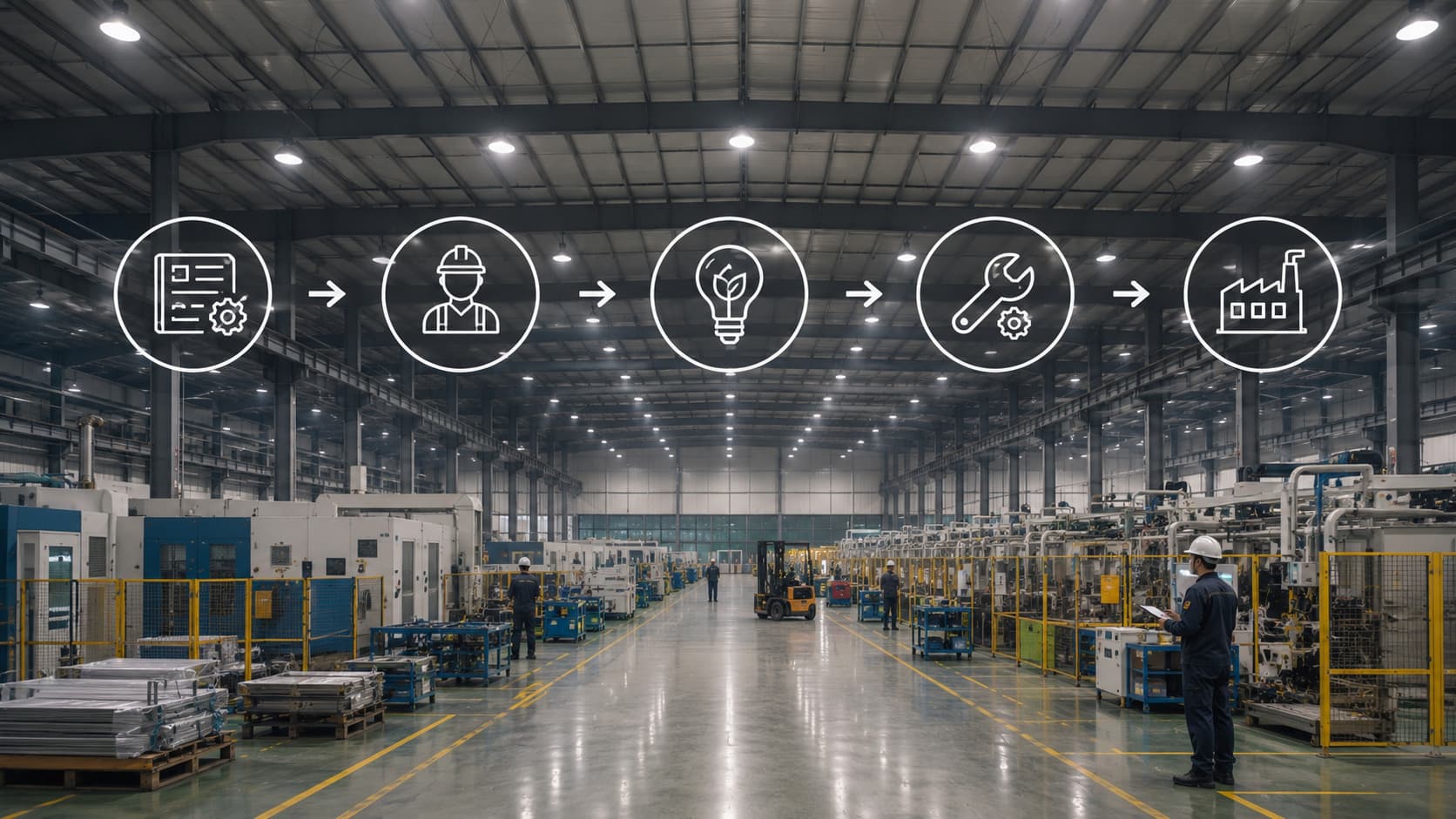
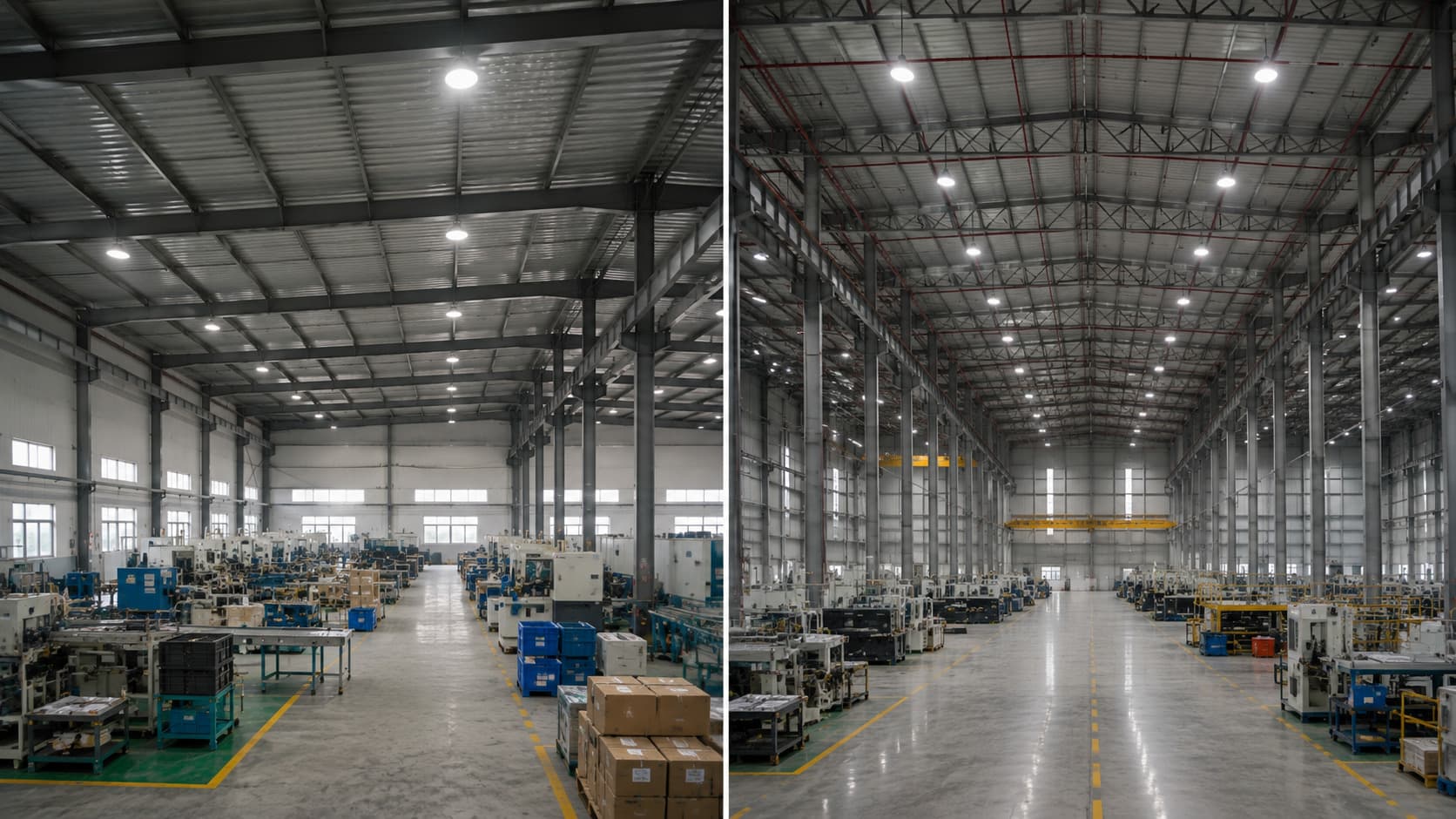
Factories with the same floor area may require completely different lighting layouts depending on their ceiling height and working environment.

Factories with the same floor area may require completely different lighting layouts depending on their ceiling height and working environment.

What factors determine the number of LED High Bay luminaires required?

The required number of luminaires is not determined by a single formula. Instead, it is the result of evaluating multiple technical factors that influence lighting performance, operational efficiency and long-term investment.

One of the most important considerations is the required illuminance at the working plane. Manufacturing lines, assembly areas, inspection stations and warehouses often require different lighting levels depending on the visual tasks being performed. Calculating the number of luminaires without first defining the required illuminance may result in a lighting system that does not meet operational needs.

Mounting height is another key factor. As the distance between the luminaire and the working surface increases, lighting performance changes significantly. Ceiling height directly affects beam distribution, luminaire spacing and the number of fixtures needed to achieve uniform illumination.

Other considerations include beam angle, wall and ceiling reflectance, equipment layout, operating hours and environmental conditions. These factors work together to determine how light is distributed throughout the facility.

For this reason, the number of luminaires should be viewed as the outcome of a complete lighting design process rather than the starting point.

Practical Perspective

Many businesses request a quotation by providing only the floor area of their factory. While this information is useful for an initial estimate, it is rarely sufficient to determine the correct number of luminaires.

Without details such as ceiling height, production activities and lighting requirements, any recommendation can only serve as a preliminary reference.

Why doesn't increasing wattage always make a factory brighter?

When a factory appears too dark, replacing existing luminaires with higher-wattage models is often considered the quickest solution. However, increasing wattage does not necessarily improve the overall lighting quality.

Wattage only indicates how much electrical power a luminaire consumes. What truly matters is how efficiently light reaches the working area. A high-wattage luminaire with an unsuitable beam angle may create an overly bright area directly beneath the fixture while leaving surrounding workspaces underlit.

On the other hand, a properly designed lighting layout using appropriately selected luminaires can provide better uniformity, improved visual comfort and lower energy consumption throughout the facility.

In industrial lighting, the objective is not to generate the highest possible light output. The goal is to deliver the right amount of light exactly where it is needed while maintaining long-term energy efficiency.

Technical Perspective

If an existing lighting system does not provide sufficient illumination, businesses should first evaluate:

The lighting layout.
Luminaire spacing.
Beam angle.
Mounting height.
Actual illuminance at the working plane.

In many situations, improving the lighting design produces better results than simply installing higher-wattage luminaires.

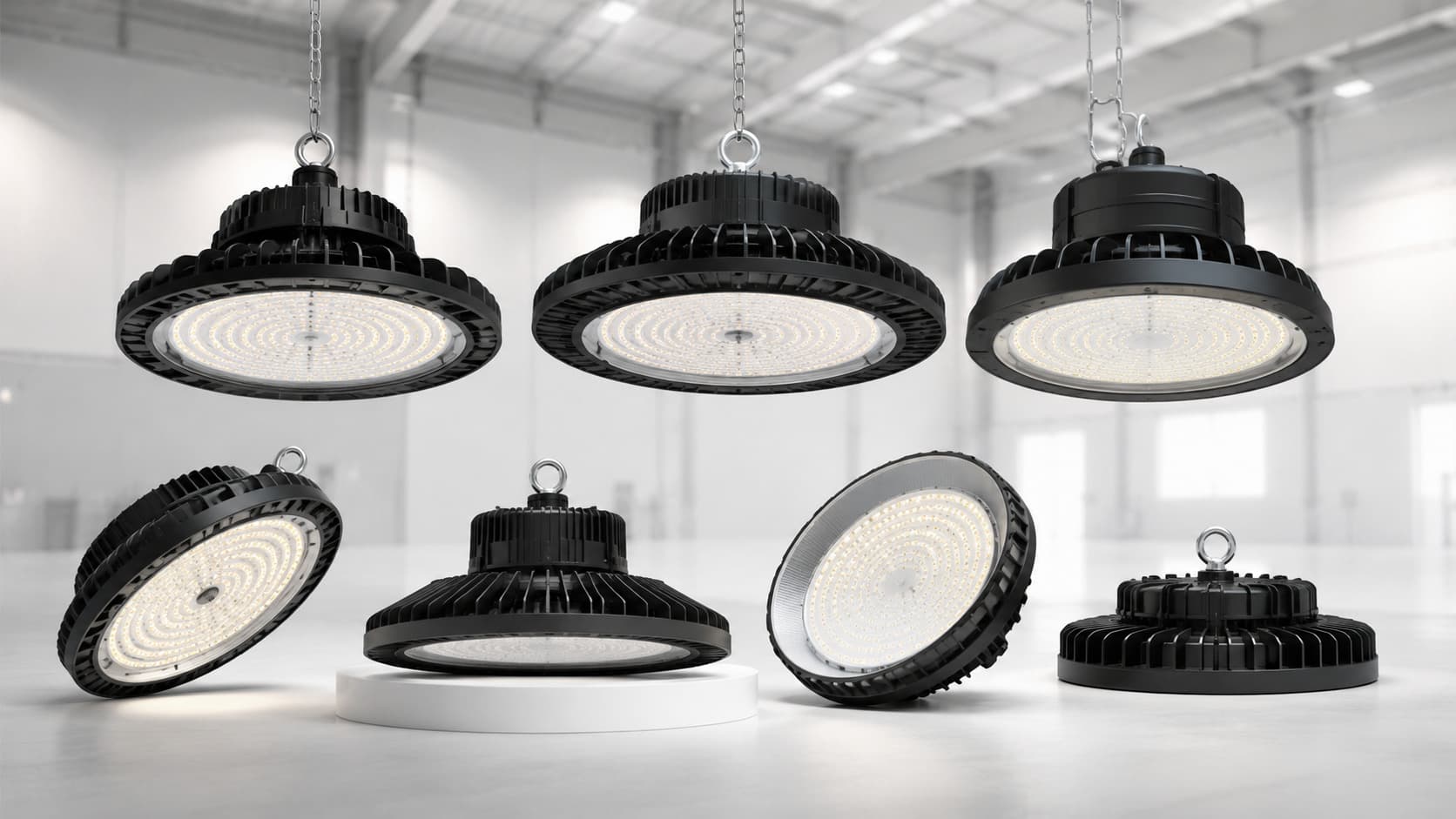
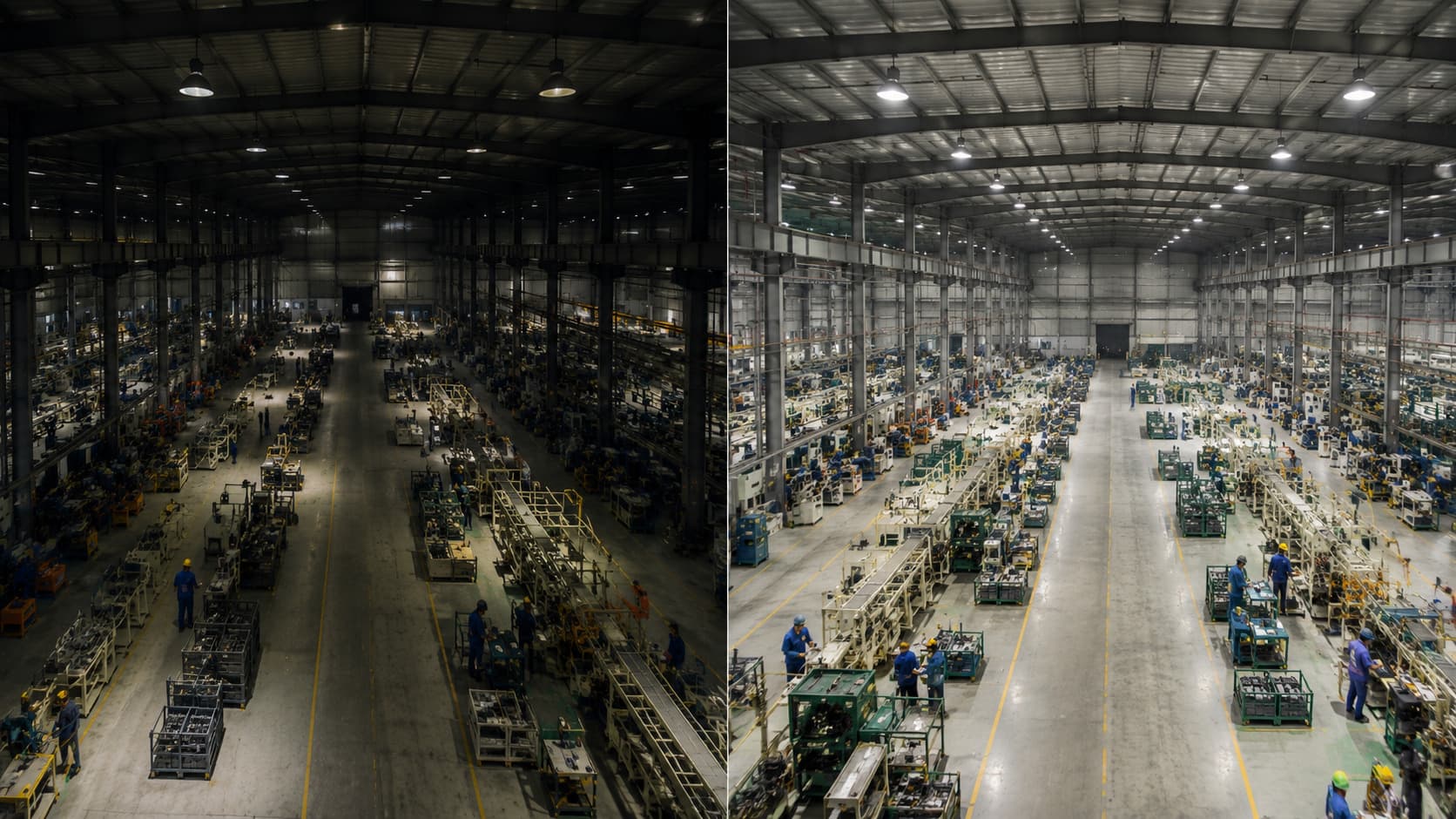
The same LED High Bay luminaire can deliver completely different lighting performance depending on how it is arranged within the facility.

The same LED High Bay luminaire can deliver completely different lighting performance depending on how it is arranged within the facility.

Why is luminaire layout just as important as equipment selection?

Selecting the right LED High Bay luminaire is only one part of designing an effective industrial lighting system. Even high-quality equipment may fail to deliver the expected results if the lighting layout is not planned appropriately.

The spacing between luminaires, mounting height and beam distribution all influence how evenly light reaches the working area. When luminaires are installed too far apart, bright spots may appear directly beneath each fixture while darker zones remain between them. Conversely, installing luminaires too close together may increase equipment costs without providing a proportional improvement in lighting quality.

An effective lighting layout aims to deliver consistent illumination throughout the workspace rather than concentrating light in selected areas. Uniform lighting improves visibility, enhances workplace safety and creates a more comfortable environment for employees performing detailed tasks.

For industrial facilities, lighting layout should always be considered together with luminaire selection. These two factors work together to determine the overall performance of the lighting system.

Practical Perspective

During lighting upgrades, businesses sometimes request additional luminaires because certain areas appear too dark. However, after reviewing the existing installation, the issue is often related to luminaire positioning rather than the number of fixtures.

In many cases, adjusting the lighting layout can significantly improve lighting quality without increasing the total number of luminaires.

When should businesses perform a lighting simulation before investing?

Not every lighting project requires a simulation. However, for larger industrial facilities or projects with specific lighting requirements, simulation provides valuable insight before equipment is purchased and installed.

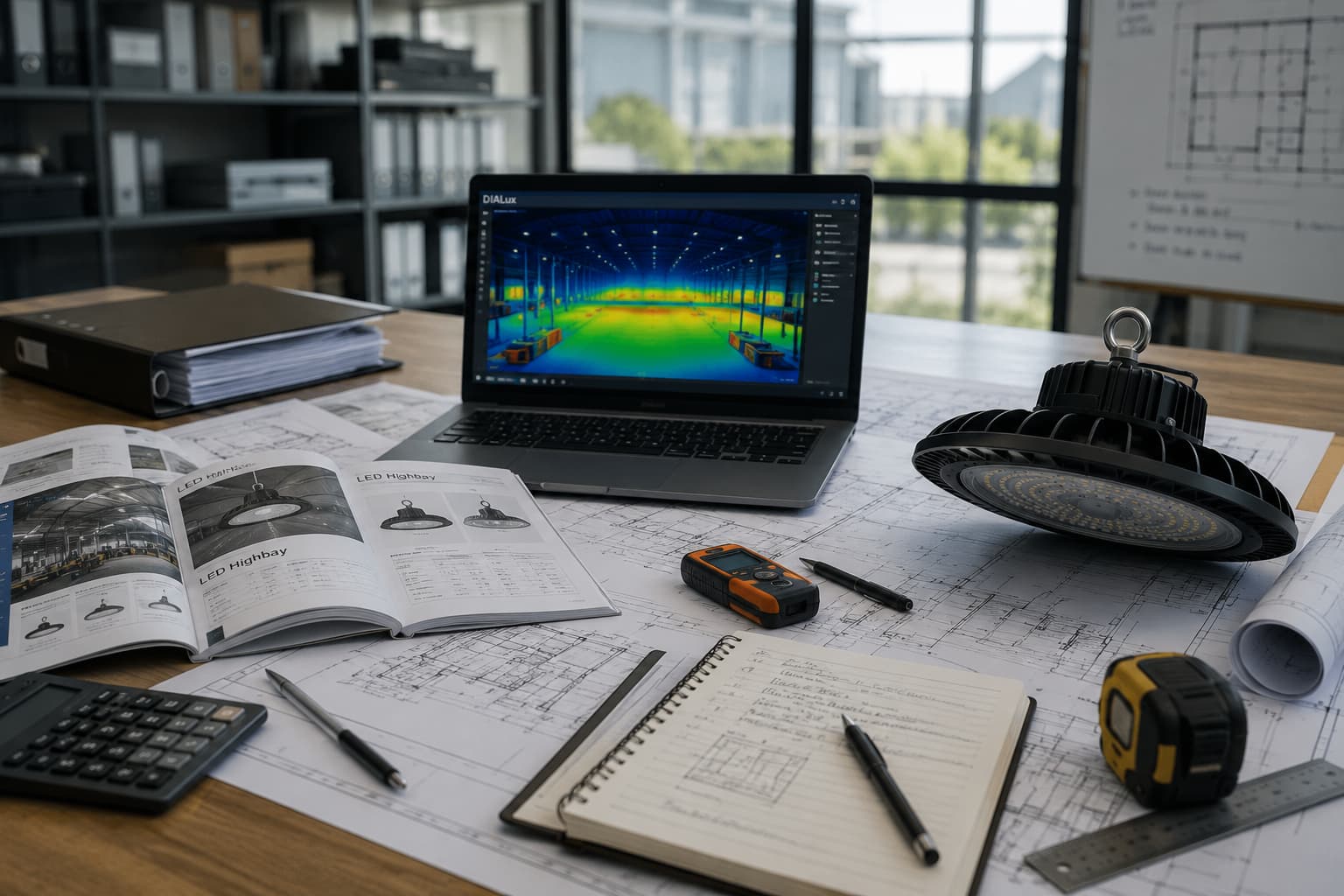
Lighting simulation software such as DIALux allows designers to evaluate how light will be distributed throughout the facility. It helps verify illuminance levels, lighting uniformity and overall system performance before installation begins.

Simulation is particularly beneficial for projects involving:

High-ceiling factories.
Warehouses with tall storage racks.
Manufacturing areas containing large machinery.
Facilities with strict lighting standards.
Projects focused on long-term energy efficiency.

Instead of identifying lighting problems after installation, simulation makes it possible to optimize the design during the planning stage. This reduces the likelihood of adding luminaires, relocating fixtures or modifying the lighting system after commissioning.

For large industrial projects, this approach often saves both investment costs and future maintenance expenses.

HKD Lighting Perspective

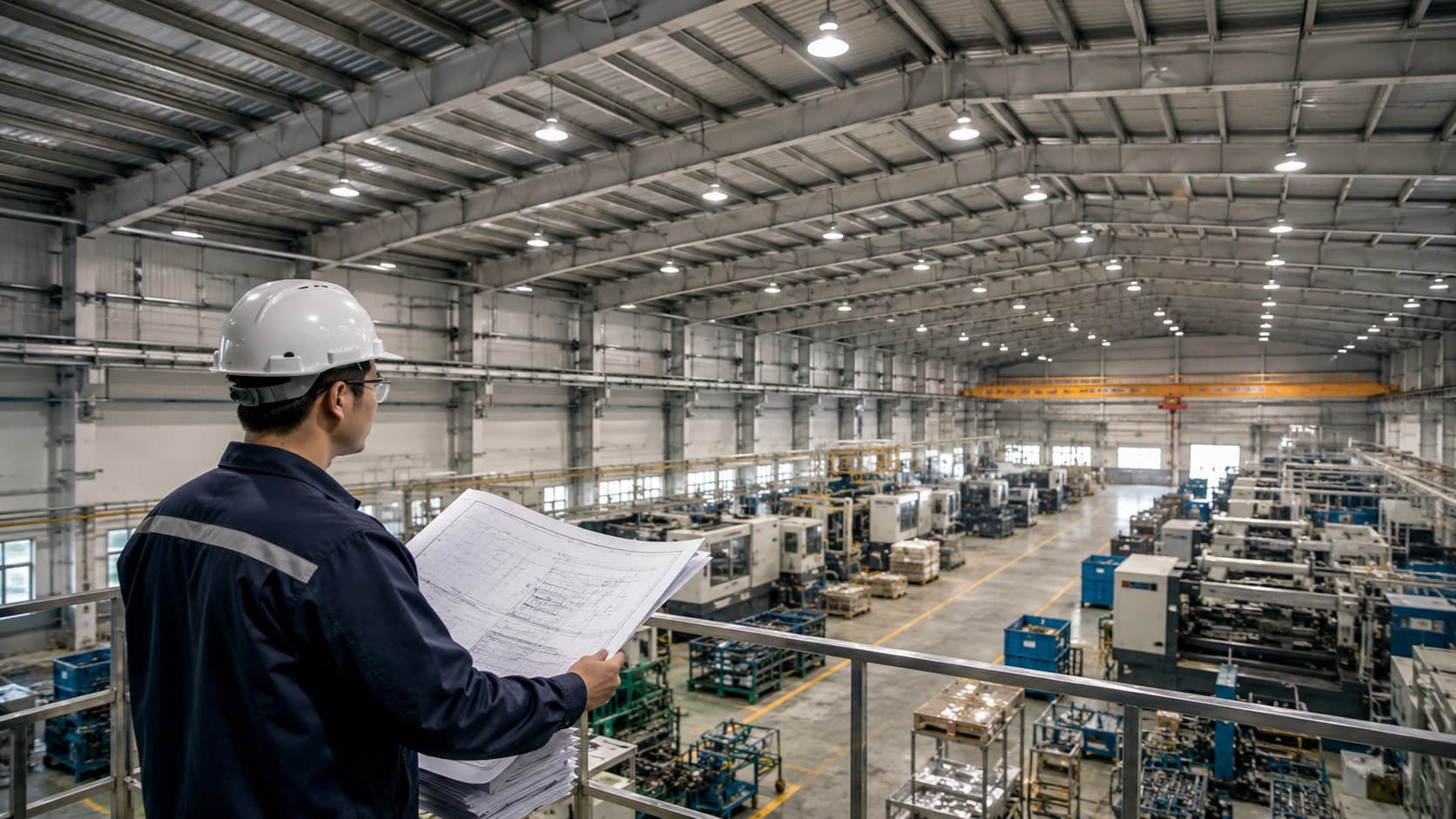
During the consultation process, HKD Lighting typically evaluates the facility layout or construction drawings before recommending the number of luminaires. For projects with demanding lighting or energy-efficiency requirements, lighting simulation helps compare multiple design options and supports more informed investment decisions.

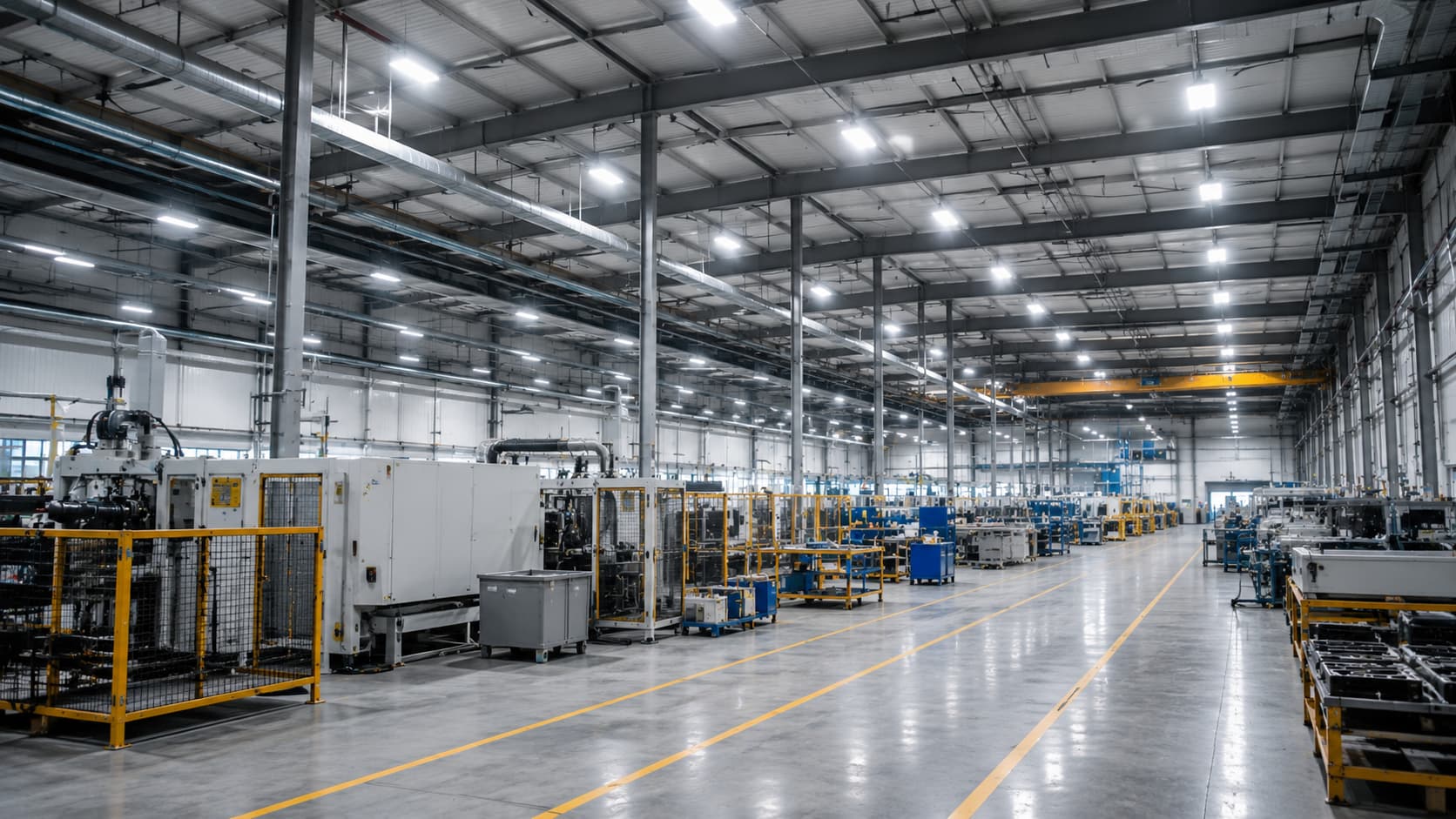
An effective industrial lighting system should be evaluated based on its long-term operating performance rather than its initial installation cost.

An effective industrial lighting system should be evaluated based on its long-term operating performance rather than its initial installation cost.

What information should businesses prepare before requesting a lighting calculation?

The accuracy of a lighting proposal depends largely on the information available during the planning stage. In many projects, businesses initially provide only the floor area and request an estimate of the required number of luminaires. While this is enough for a preliminary discussion, it is rarely sufficient for developing an effective lighting solution.

Whenever possible, businesses should also provide floor plans, ceiling height, production activities, photographs of the existing facility and any specific lighting requirements for individual work areas. These details help determine luminaire spacing, beam distribution and the appropriate illuminance for each application.

If detailed construction drawings are not yet available, basic information such as building dimensions, mounting height and the intended use of the space can still provide a useful starting point for developing an initial lighting proposal.

Preparing this information early in the project helps shorten the consultation process while reducing unnecessary revisions during implementation.

What should be considered beyond the number of luminaires?

The number of luminaires is only one element of a successful industrial lighting system. Businesses should also evaluate how the entire system will perform throughout its operating life.

A well-designed lighting solution helps reduce energy consumption, maintain consistent lighting quality and minimize maintenance requirements over many years of operation. At the same time, the system should remain flexible enough to accommodate future production changes or facility expansion.

Selecting fewer luminaires does not always reduce costs if the lighting quality is compromised or expensive modifications become necessary after installation. Likewise, investing in additional equipment without proper planning may increase capital costs without improving overall system performance.

Instead of asking only "How many luminaires do we need?", businesses should also consider "Which lighting solution will deliver the greatest long-term value?"

HKD Lighting Perspective

At HKD Lighting, determining the required number of luminaires is never the first step in the consultation process.

Each project begins with an evaluation of the facility, including its layout, operational requirements, lighting objectives and long-term investment goals. These factors provide the foundation for selecting an appropriate lighting solution rather than simply recommending a specific product or quantity.

As a provider of genuine lighting products from multiple international brands, HKD Lighting helps businesses assess technical requirements, compare suitable product options and develop lighting solutions that support reliable operation, energy efficiency and long-term performance.
Recommended Product Category
LED High Bay Lighting for Industrial Facilities

After determining the appropriate lighting design and the required number of luminaires, businesses can explore HKD Lighting's range of LED High Bay lighting solutions for factories, warehouses and industrial buildings.

The product category includes various power ratings, beam angles and technical configurations to suit different ceiling heights and operational environments.

Explore the LED High Bay product category

→ Link to:
https://hkd.com.vn/vi/san-pham/den-led-nha-xuong-highbay-hkd

Explore LED High Bay lighting solutions designed for a wide range of industrial applications.

Explore LED High Bay lighting solutions designed for a wide range of industrial applications.

Conclusion

Calculating the number of LED High Bay luminaires involves far more than dividing the floor area by the wattage of each fixture. The effectiveness of an industrial lighting system depends on how well the lighting design reflects the characteristics of the facility, operational requirements and the intended working environment.

When these factors are evaluated together, businesses can achieve better lighting quality, improved energy efficiency and lower operating costs throughout the lifecycle of the installation.

For factories, warehouses and other industrial projects, consulting an experienced lighting solution provider during the planning stage helps reduce project risks and supports more informed investment decisions.