An Efficient Factory Lighting System Is About More Than Just the Luminaires
21 tháng 7, 2026

An Efficient Factory Lighting System Is About More Than Just the Luminaires

An effective industrial lighting system depends on more than LED luminaires. Discover how lighting design, layout and operating conditions influence long-term performance, energy efficiency and maintenance costs.

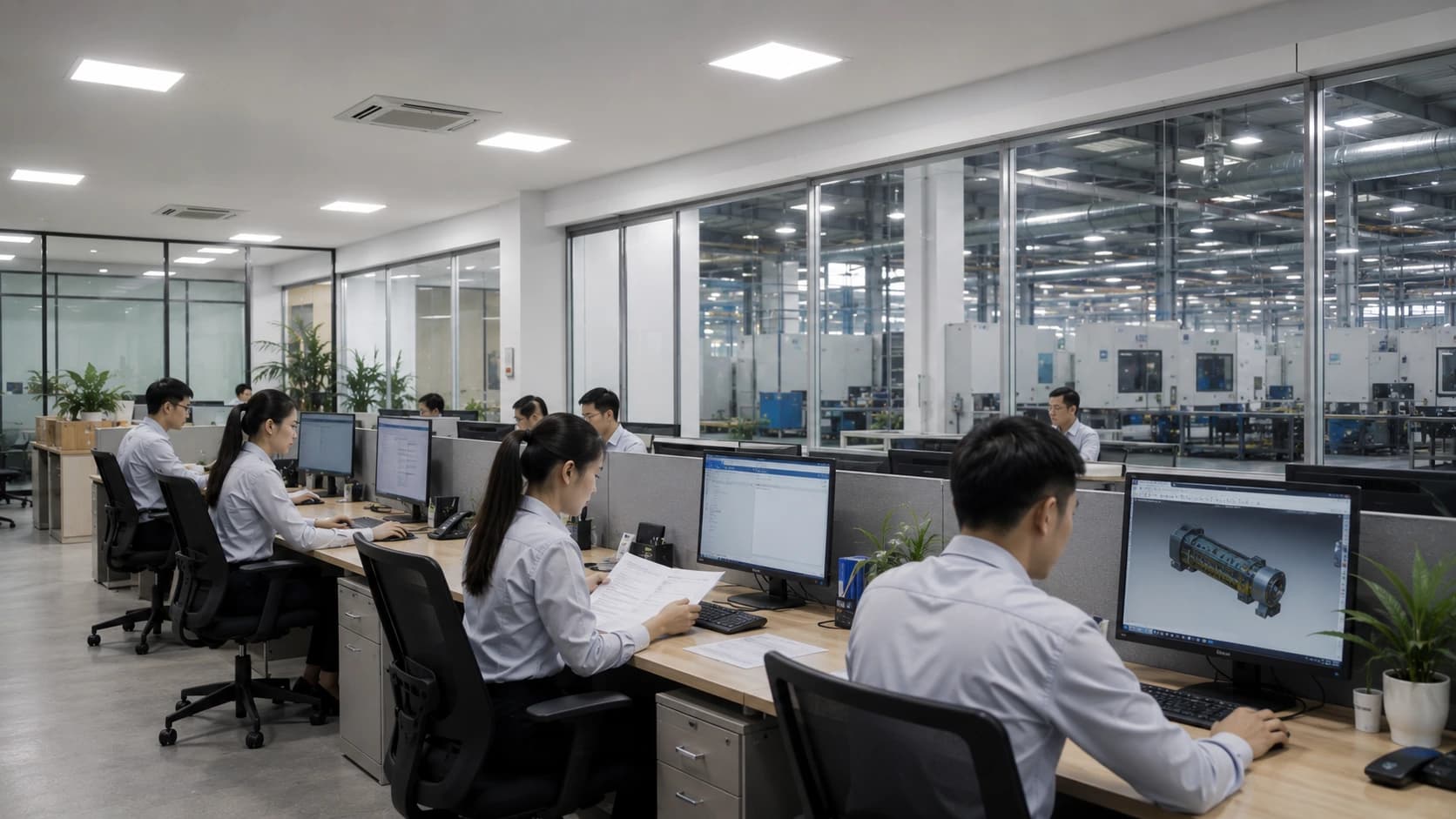
When planning a new lighting installation or upgrading an existing facility, many businesses naturally begin by comparing LED luminaires based on wattage, brand reputation or purchase price. These are visible and measurable factors, making them the easiest place to start. In industrial projects, however, the final performance of a lighting system is rarely determined by the luminaire alone. Long-term efficiency depends on how the entire system is designed to match the building, production process and operating environment. In practice, two factories may install the same LED high bay luminaire with identical wattage and specifications, yet achieve completely different results. One facility benefits from uniform illumination, stable operation and lower maintenance costs, while another experiences dark areas, glare and unexpected adjustments shortly after installation. The difference is not necessarily the product itself. More often, it comes from whether the lighting solution has been designed around the actual requirements of the facility. For industrial applications, the objective is not simply to make the space brighter. It is to deliver the right amount of light, in the right location, throughout the entire operating life of the facility.
The same luminaire does not always deliver the same result

The same luminaire does not always deliver the same result

Why Can the Same LED Luminaire Deliver Different Results in Different Factories?

No two manufacturing facilities are exactly alike.

Even if two factories share a similar floor area, differences in ceiling height, structural layout, machine arrangement, surface reflectance and production workflow create unique lighting requirements.

For example, a precision manufacturing facility requires workers to distinguish small details accurately throughout long operating shifts. A logistics warehouse, on the other hand, prioritizes visibility along storage aisles, safe forklift operation and minimizing dark areas between racks.

Applying the same lighting layout to both environments rarely produces the desired outcome.

Operating conditions also play a significant role. Facilities exposed to high temperatures, dust, moisture or continuous three-shift production place far greater demands on lighting equipment than standard industrial environments.

As a result, a lighting solution that performs well in one factory may not be suitable for another.

Industrial lighting is therefore not about finding a universal luminaire. It is about identifying the most appropriate solution for each operating environment.

Industrial Lighting Is a Complete System, Not Just a Collection of Luminaires

When people look at a completed lighting installation, they usually notice only the luminaires mounted on the ceiling.

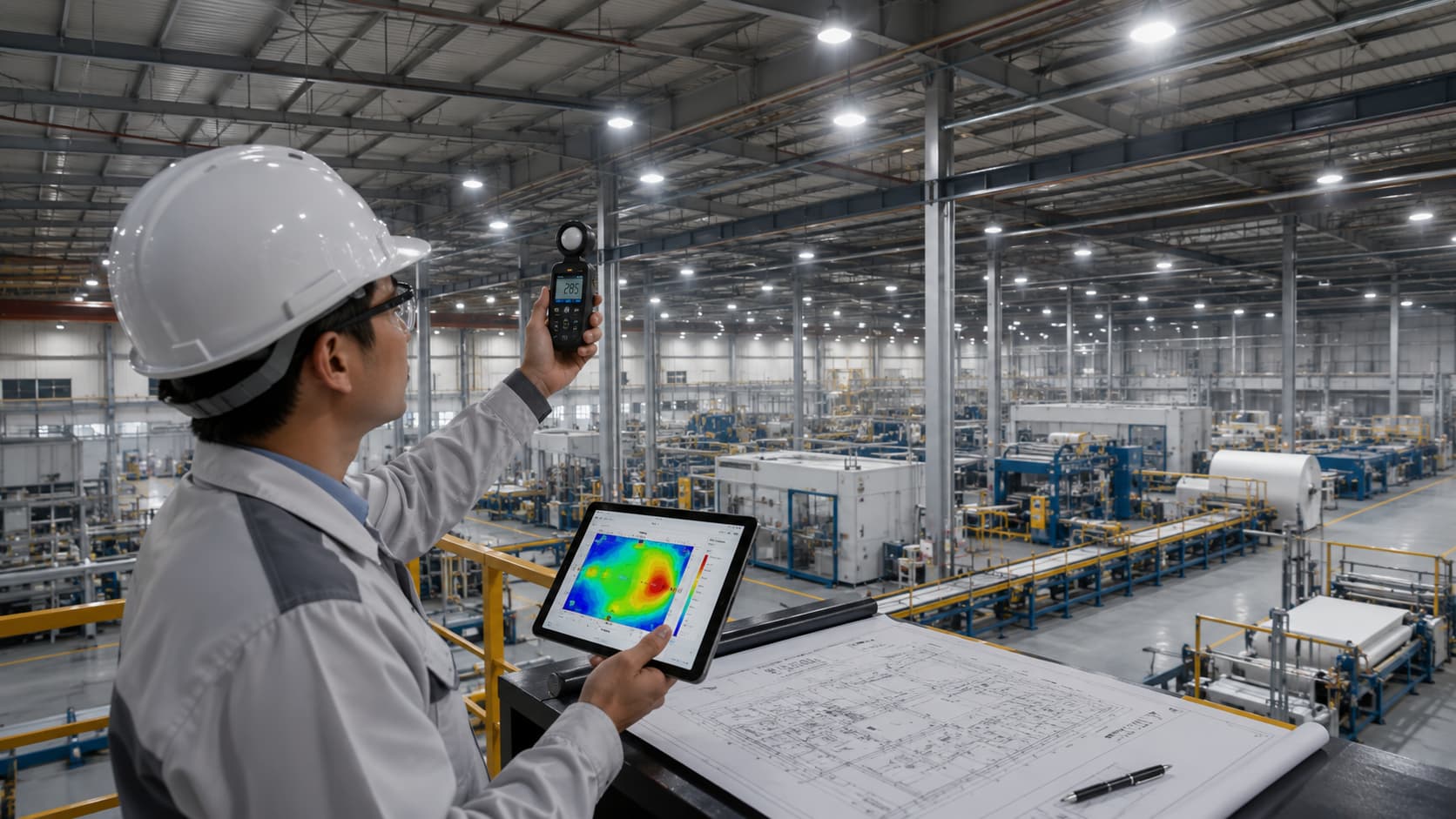
Behind every successful industrial lighting system, however, is a design process that evaluates multiple technical factors before any equipment is selected.

Mounting height determines beam spread and spacing between luminaires.

Roof structures and steel beams influence installation positions and may create unwanted shadows if not considered during design.

Ceiling, wall and floor finishes affect how light is reflected throughout the workspace.

Production lines determine where higher illuminance levels are required compared with supporting areas.

Designers must also consider operating schedules, energy efficiency targets, future factory expansion and long-term maintenance requirements.

Only when these factors are evaluated together can a lighting system achieve its intended performance.

For industrial projects, investing in lighting should therefore be viewed as developing an integrated solution rather than simply purchasing luminaires.

Each production environment requires its own lighting strategy rather than a single solution for every factory.

Each production environment requires its own lighting strategy rather than a single solution for every factory.

A Brighter Space Does Not Always Mean Better Lighting

One of the most common misconceptions is that a brighter workplace automatically indicates a successful lighting installation.

In reality, visual brightness alone reflects only a small part of lighting quality.

Some work areas appear very bright, yet employees still struggle to perform visual tasks because light is concentrated in the wrong locations or excessive glare causes discomfort.

Conversely, a well-designed lighting system may operate at lower power while providing greater visual comfort, improved visibility and reduced eye fatigue throughout the working day.

This is why professional lighting design considers much more than illuminance.

Lighting uniformity, colour rendering (CRI), glare control (UGR), optical distribution, luminous efficacy and the actual operating environment all contribute to overall lighting performance.

These parameters should never be evaluated independently because together they determine the effectiveness of the entire lighting system.

Higher Wattage Does Not Always Mean Better Lighting Performance

When evaluating industrial lighting solutions, wattage is often the first specification businesses compare because it is simple and familiar.

However, wattage only indicates how much electrical power a luminaire consumes. It does not describe how effectively that energy is converted into usable light at the working plane.

A 200-watt LED high bay is not automatically better than a 150-watt model. If luminous efficacy is lower, the beam distribution is unsuitable or the layout has not been properly designed, the actual illuminance at the work area may still fall short of expectations.

Many factory upgrades involve installing higher-wattage luminaires with the hope of making the workspace brighter. While this often increases overall brightness, it can also introduce glare, uneven illumination and higher energy consumption without improving working conditions.

Effective industrial lighting is achieved by combining optical design, luminaire performance and installation layout rather than increasing wattage alone.

Lighting quality depends on system design rather than luminaire wattage alone.

Lighting quality depends on system design rather than luminaire wattage alone.

Lighting Performance Depends on More Than Product Specifications

Selecting industrial lighting based only on wattage, lumen output or purchase price rarely provides a complete picture.

Several technical characteristics work together to determine how a lighting system performs over many years of operation.

Luminous efficacy measures how efficiently electrical energy is converted into useful light.

Optical distribution determines how evenly illumination reaches the working area.

Colour Rendering Index (CRI) affects how accurately colours are perceived, especially in quality inspection and precision manufacturing.

Unified Glare Rating (UGR) contributes to visual comfort by reducing eye strain during long operating hours.

The quality of the LED driver, thermal management and lumen maintenance also have a direct impact on long-term reliability.

Considering these parameters together allows businesses to make better investment decisions than comparing product specifications alone.

Actual Operating Conditions Determine Real Service Life

Technical specifications published in product catalogues are measured under controlled laboratory conditions.

Industrial facilities rarely operate under those same conditions.

High ambient temperatures, dust, humidity, vibration and continuous production schedules all place additional stress on lighting equipment.

If luminaires are selected without considering these environmental factors, their actual service life may be significantly shorter than expected.

Operating schedules also matter.

A factory running twenty-four hours a day requires a different lighting strategy from one operating only during office hours.

Evaluating the operating environment before selecting equipment helps reduce maintenance costs, improve system reliability and extend the lifespan of the entire installation.

The Purchase Price Is Only One Part of the Investment

Initial equipment cost is often the easiest figure to compare during project planning.

However, it represents only a small portion of the total cost of owning an industrial lighting system.

Businesses should also evaluate electricity consumption, maintenance requirements, replacement parts, labour costs, production downtime and future expansion plans.

A lower purchase price may eventually lead to higher operating expenses if the system consumes more energy or requires frequent maintenance.

Conversely, a properly designed lighting solution often reduces the number of luminaires required, lowers electricity usage and extends maintenance intervals.

This is why many industrial projects increasingly evaluate lighting investments using the concept of Total Cost of Ownership (TCO) rather than purchase price alone.

Different Areas of a Factory Require Different Lighting Strategies

Within the same manufacturing facility, lighting requirements vary according to the function of each area.

Production lines require lighting that supports accurate visual tasks over extended working hours.

Quality inspection areas need stable illumination and excellent colour rendering to reduce inspection errors.

Warehouses prioritize visibility along storage aisles and safe forklift operation.

Technical rooms, corridors and supporting spaces have completely different lighting objectives.

Applying the same lighting layout throughout the entire facility rarely produces optimal results.

An effective industrial lighting system combines multiple lighting strategies that match the operational needs of each area.

What Information Should Be Prepared Before Selecting an Industrial Lighting Solution?

A successful lighting project begins with understanding the facility rather than requesting a quotation.

The more accurate the project information is, the more appropriate the proposed solution will be.

For new factories, important information includes floor plans, mounting height, equipment layout, production processes and future expansion plans.

For renovation projects, evaluating the existing lighting system, electricity consumption, maintenance history and areas experiencing glare or insufficient illumination helps identify the underlying problems before replacing equipment.

Businesses should also define their primary objective from the beginning.

Some focus on reducing energy consumption.

Others aim to improve productivity, lower maintenance costs or standardize lighting across multiple facilities.

Different objectives require different lighting strategies.

Common Mistakes When Investing in Industrial Lighting

One common mistake is copying a lighting solution from another factory simply because both facilities have similar dimensions.

Even small differences in ceiling height, machinery layout, production activities or operating schedules can significantly change lighting requirements.

Another common approach is selecting luminaires based only on purchase price without considering long-term operating costs.

Many businesses also evaluate lighting quality only by overall brightness while overlooking important factors such as lighting uniformity, glare control and task-specific illumination.

Correcting these issues after installation is usually more expensive than addressing them during the design stage.

HKD Lighting's Perspective

At HKD Lighting, every industrial lighting project begins with understanding the customer's operational requirements rather than recommending a particular luminaire or brand.

Our technical team evaluates facility characteristics, production activities, operating conditions and project objectives before proposing a suitable lighting solution.

This approach helps businesses avoid decisions based solely on product specifications or purchase price.

HKD Lighting is a lighting solution consultant and authorized distributor of genuine lighting products from multiple international brands.

Because we are not limited to a single manufacturer, we are able to recommend solutions that best balance technical performance, investment budget, operating efficiency and future scalability.

For us, a successful project is measured not by the number of luminaires supplied, but by how effectively the lighting system supports our customer's operations over many years.

Hình ảnh

Conclusion

An effective industrial lighting system is not determined by selecting the highest-wattage luminaire or the most recognized brand.

Lighting equipment delivers its full value only when it forms part of a well-designed solution tailored to the actual operating conditions of the facility.

By evaluating building characteristics, production requirements, lighting standards and total cost of ownership together, businesses can make more informed investment decisions and achieve long-term operational benefits.

As manufacturers continue to prioritize productivity, energy efficiency and sustainable operations, industrial lighting has become far more than a supporting utility. It is an essential component of the working environment that directly influences operational performance, maintenance costs and employee wellbeing.

Investing in the right lighting solution from the beginning provides a stronger foundation for reliable production, lower operating costs and future business growth.