Key Factors That Determine the Performance of an Industrial Lighting System
Industrial lighting performance depends on the overall system design rather than a single luminaire.
An industrial lighting system should be evaluated not only by its initial brightness but also by how effectively it supports production activities over many years. A successful lighting solution balances technical performance, operational efficiency and long-term investment.
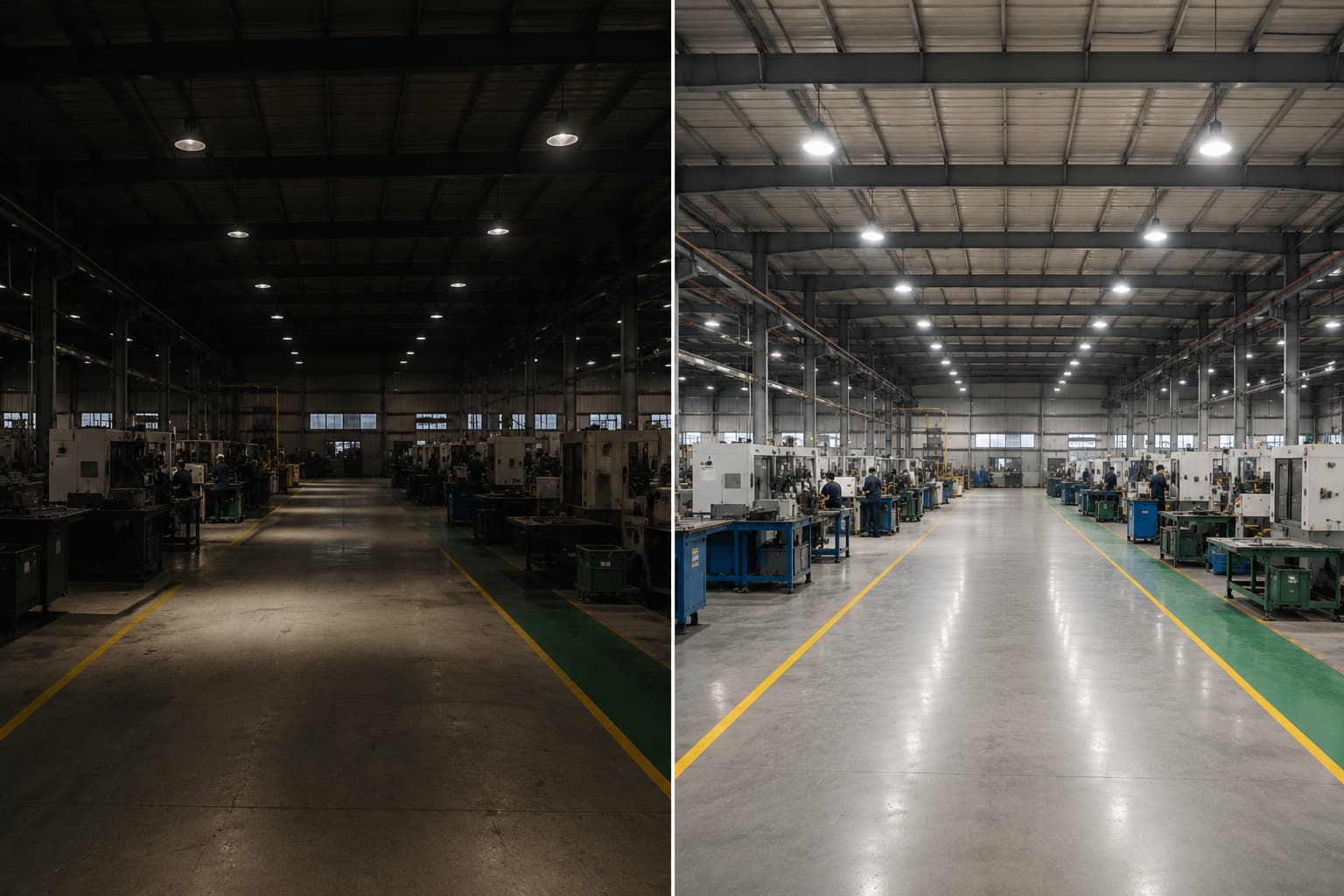
Lighting quality is influenced by much more than the electrical power or luminous flux of a luminaire. The way light is distributed throughout the facility, the suitability for each working area and the ability to maintain consistent performance over time are equally important.
For manufacturing companies, an effective lighting system typically needs to achieve several objectives simultaneously:
Provide adequate illuminance for each working area.
Deliver uniform light distribution while minimizing dark spots.
Reduce glare that may affect visual comfort and productivity.
Improve energy efficiency during daily operation.
Match the environmental conditions of the facility.
Allow convenient maintenance and future expansion.
The overall performance of an industrial lighting system is therefore determined by the combination of these factors rather than by a single technical specification.